Guest Room Bedding Guide
Coyuchi Pillow Shams: A Practical Guide to Fabric, Fit, and Care
A pillow sham can make a bed look finished in seconds. Choosing one that continues to look and feel right takes a little more thought: check the insert dimensions, consider the fabric and closure, and make sure the care routine fits the room’s laundry demands.
For guest rooms, the goal is not decoration alone. A well-chosen sham should sit neatly, work comfortably alongside sleeping pillows, and withstand the handling and laundering that come with regular turnover.
A small layer with a visible job
Pillows are among the first things people notice when they enter a bedroom. They set the bed’s scale, echo its colors and textures, and suggest whether the room is ready for rest. A sham gives a pillow a more finished outer layer, often with a flange, border, embroidery, quilting, or another detail that distinguishes it from a straightforward pillowcase.
In a guest room, this layer has to do more than look composed. It may be removed before sleep, handled by different guests, and washed repeatedly. Its usefulness depends on a series of practical decisions: whether the insert is the right size, whether the fabric suits the room’s climate and style, whether the closure is secure, and whether the care instructions can be followed consistently.
That is a helpful way to approach Coyuchi pillow shams and other pillow covers: think of them as part of a bedding system, rather than as an isolated decorative purchase. The pillowcase used for sleeping, the sham displayed at check-in, the insert inside it, and the laundry routine all affect how the bed works as a whole.
The name on a label cannot answer every operational question. Product dimensions, fiber content, construction, closure details, and care directions should be checked for the specific item under consideration. Collections and specifications can change, so use the current product information rather than relying on assumptions based on a brand or a previous purchase.
First, distinguish a sham from a pillowcase
The terms are sometimes used loosely, but they usually describe different roles. A pillowcase is generally designed for the pillow a guest sleeps on. It prioritizes direct skin contact, straightforward laundering, and an opening that makes it easy to put on and remove. A sham is often used as a finishing layer, adding a more structured or decorative face to a pillow.
Many rooms use both: a pillowcase on the sleeping pillow, with a sham placed in front of or around it for presentation. In other setups, a sham may cover an insert that is removed before bedtime. The right arrangement depends on the property’s service style, the amount of space available, and the way staff prepare the room.
Before buying, decide what work the item is expected to do. If it will remain on a pillow guests sleep on, comfort and a smooth, unobtrusive construction matter especially. If it is primarily a presentation layer, edge details and color coordination may carry more weight—but ease of removal and cleaning still matter. A clear distinction in the room’s linen plan helps prevent decorative pieces from being mistaken for guest-ready pillowcases.
This is particularly useful when a property keeps several kinds of pillow covers in circulation. Labeling storage locations and documenting which pieces are for sleeping and which are for display can make room setup more consistent. It also gives staff a simple answer when a guest asks which pillow is intended for use.
Fabric sets the feel—and the workload
Fabric influences how a sham feels in the hand, how it sits on the bed, and how it behaves after washing. Fiber content is only one part of the picture. The weave, fabric weight, finishing, seams, and decorative treatments also shape performance. A cotton sham, for example, can feel different depending on whether its construction is crisp and matte or smooth and lustrous.
Cotton: familiar and adaptable
Cotton is widely used in bedding because it is familiar, breathable, and available in many weaves and finishes. Percale often has a crisp, cool hand and a matte appearance; sateen usually feels smoother and has a subtle sheen. Neither weave is automatically best for every guest room. Consider the desired feel, local climate, color scheme, and how much pressing or finishing the laundry operation can support.
Decorative cotton shams may include piping, embroidery, a flange, or contrasting trim. These details can lend definition to a bed, but they also need careful attention during laundering. Check whether the trim is colorfast, whether the item can be tumble-dried, and whether the care label calls for a gentle cycle or lower heat.
Linen and other natural-fiber options
Linen has a distinctive texture and a relaxed drape. It may become softer with use, but its natural surface can appear more casual than a tightly pressed cotton sham. That can be an advantage in a retreat, inn, or guest room where a less formal presentation suits the setting. Confirm the prescribed wash temperature and drying method, and decide whether the fabric’s characteristic creasing aligns with the room’s look.
Other fibers and blends may offer particular combinations of softness, breathability, drape, or ease of care. If a product description uses terms such as “cooling,” “wrinkle resistant,” or “easy care,” read the construction and care details as well. Marketing language is not a substitute for knowing how the sham should be washed and dried in practice.
Match the fabric to the room’s purpose
A guest room used occasionally has different demands from a frequently occupied rental or hospitality property. For a lightly used bedroom, a delicate finish may be manageable. For regular turnover, simpler care and reliable replacement availability may matter more than an elaborate trim. The decision should account for the entire service cycle: use, removal, sorting, washing, drying, inspection, storage, and remaking the bed.
Cost is part of that calculation, but purchase price alone is not a useful measure. A sham that is inexpensive but difficult to clean, prone to losing its shape, or hard to match with replacements can create extra labor and a mismatched presentation. Conversely, a more detailed piece is worthwhile only if its appearance and durability justify the additional care it requires.
Pillow sham sizing: fit the insert, not just the label
“Standard,” “queen,” and “king” are convenient size labels, not guarantees of a perfect fit across every brand and design. Pillow inserts can vary in actual dimensions, loft, and firmness. Shams also differ in finished measurements, seam allowances, and styling. That means two products carrying the same size name may not create the same result on the bed.
Measure the insert and compare it with the sham’s stated dimensions. A sham that is much larger than its insert can look loose and underfilled; one that is too small may strain at the seams, distort its corners, or be difficult to close. A little fullness can create a substantial, tailored appearance, but there is no single fit ratio that works for every fabric and construction.
For accurate selection, record the insert’s length and width while it is laid flat, then check the manufacturer’s finished sham dimensions. If possible, test the combination before ordering several pieces. This is particularly important when a room uses oversized pillows, specialty inserts, or a mix of pillow formats.
In hotels, vacation rentals, and other guest spaces, consistency matters as much as an individual pillow’s fit. Standardizing insert sizes across rooms makes purchasing, storage, bed-making, and replacement more straightforward. If the property uses more than one bed size or pillow style, keep a short reference list by room type instead of relying on memory.
A quick fit check
- Measure the insert’s length and width, and note whether it is unusually full or firm.
- Compare those measurements with the sham’s finished dimensions—not just its size name.
- Check that the insert can be placed inside without forcing the corners or stressing the closure.
- After closing, smooth the fabric and inspect the edges for excess slack, bulging, or visible strain.
- Repeat the check after laundering to see whether shrinkage or changes in shape affect the fit.
Closures, seams, and finishing details
A sham’s closure affects how quickly it can be changed and how securely the insert stays in place. Common approaches include envelope-style openings, ties, buttons, and concealed zippers. Each has a different balance of appearance, convenience, and maintenance.
An envelope closure avoids extra hardware and can be quick to use, though the overlap should be deep enough to keep the insert from working out. Buttons can suit a traditional design but add small components that need inspection. A zipper may provide a neat, secure finish, but its placement and construction should be checked for comfort and durability. Ties create a decorative effect, yet may take longer to fasten and can become tangled in laundry.
Inspect the seams and corners, especially if the sham will be handled frequently. Even stitching, secure edges, and a closure that lies flat contribute to a tidy appearance. A broad flange can frame the pillow attractively, but it may fold or crease if the sham is stored under pressure. Embroidery and piping provide visual detail; they also add areas where wear or laundering stress may become noticeable first.
Details that look minor on a product page can become important during daily operation. Before adopting a style across several rooms, try it through the full routine: insert the pillow, make the bed, remove the sham, launder it according to the label, and put it back into service. That simple test reveals whether an appealing finish is also practical for the people maintaining the room.
Build a coherent guest-room bed
Shams work best when they support the bed’s overall composition. A calm palette can make the room feel orderly; a contrasting border can define the pillow arrangement. Texture adds depth without requiring a complicated pattern. The key is to make the decorative layer feel deliberate rather than crowded.
Begin with the bed’s main linens, then choose shams that complement their color, weave, and level of formality. A crisp percale sham may sit comfortably alongside similarly structured sheets. A softly draped or textured sham may suit a more relaxed presentation. These are design choices, but they have operational consequences: more colors and specialized finishes can mean more sorting, more storage categories, and more complicated replacement orders.
Keep guest comfort in view. A stack of decorative pillows can create an attractive first impression, but too many pieces may make the bed inconvenient to use. Decide where display pillows will go when removed, and ensure the room offers a clean, obvious place for them. A restrained arrangement is often easier for guests and staff alike.
For multiple rooms, define a repeatable standard: number of sleeping pillows, number of shams, placement, and the intended relationship between each sham and its insert. A brief bed-making guide can document this standard without dictating every personal preference. Consistency should make the room feel cared for, not rigid.
Care that preserves the fabric and the finish
Care starts with the product label. Fiber content, dyes, trims, finishes, and construction can all affect the right wash and dry method. Avoid assuming that every cotton sham can be treated alike or that a fabric’s natural composition means it requires the same routine as another natural fiber. The maker’s directions take priority over a general rule.
Before washing, remove the insert and close buttons or zippers where appropriate. Check the sham for loose threads, marks, or damage, and sort it with compatible colors and fabrics. Using a suitable detergent and avoiding overloaded machines can help reduce friction. If the care label specifies a delicate cycle, cold or lukewarm water, low heat, or air drying, build those instructions into the laundry routine rather than improvising from one cycle to the next.
Prompt removal from the dryer can help reduce creasing for items that permit tumble drying. Some fabrics may benefit from light ironing or steaming, while others are intended to keep a more relaxed texture. Take care around embroidery, piping, and closures; excessive heat or pressure can flatten, distort, or damage these details. Never use bleach or strong stain treatments unless the item’s instructions allow it, since an apparently small intervention can affect color and finish.
After washing, inspect the sham before it returns to the room. Look for remaining stains, weakened seams, loose buttons, closure problems, discoloration, and changes in dimensions. If a piece is not ready for guest use, set it aside for treatment or repair rather than returning it to the linen shelf. A short inspection prevents a small defect from becoming a visible problem at check-in.
Store clean shams fully dry in a clean, well-ventilated area. Keep them away from direct, prolonged sunlight, which can affect some colors, and avoid compressing decorative edges for long periods. If several sizes or styles are used, label shelves or bins clearly. A consistent storage system reduces mix-ups and makes it easier to find matching pieces.
A practical buying checklist
Before choosing Coyuchi pillow shams or another pillow cover for a guest space, use a checklist that considers both the room and the people responsible for maintaining it. The most attractive option is not necessarily the most suitable; the best choice balances presentation, comfort, and repeatable care.
- Purpose: Decide whether the sham is decorative, intended for sleeping use, or expected to serve both roles.
- Insert match: Measure the pillow and compare it with the sham’s finished dimensions.
- Fabric: Review fiber, weave, texture, weight, and any finish that may affect feel or laundering.
- Closure: Choose an opening that is secure and manageable for the staff or household routine.
- Construction: Check seams, corners, trim, embroidery, and closure hardware for durability.
- Care directions: Confirm the wash temperature, cycle, drying method, ironing guidance, and any restrictions.
- Room coordination: Make sure the color and finish work with the existing sheets, duvet cover, and room palette.
- Replacement plan: Consider whether matching pieces can be reordered and how many spares the property needs.
- Trial run: Test one sham through use and laundering before standardizing it across a larger number of rooms.
Common mistakes—and how to avoid them
Buying by size name alone. Size labels do not capture every variation in insert loft or sham dimensions. Measure both components and test the fit before committing to a set.
Treating every sham as a pillowcase. A decorative sham may not be designed for direct, nightly contact with the face. If guests are expected to sleep on the covered pillow, make sure the item’s construction and care plan suit that use, and provide an appropriate pillowcase where needed.
Ignoring the laundry environment. A finish that needs special handling may be a poor match for an operation that depends on fast, standardized turnover. Check care instructions against the equipment and procedures actually available.
Overlooking trim and closures. Embroidery, ties, buttons, and zippers can contribute to the design, but they need inspection. Account for them when evaluating maintenance and staff time.
Mixing sizes in storage. Unlabeled or inconsistent stock leads to slow room setup and mismatched beds. Label by finished size and style, and keep an inventory of inserts and covers together.
Choosing a look without a room standard. A beautiful sham can still feel out of place if its color or formality conflicts with the rest of the bedding. Decide on a simple visual standard before ordering for multiple rooms.
A note on coordinating sheets and shams
Shams do not have to match the sheets exactly. They should, however, feel related to the bed’s other layers. A shared color, texture, or level of formality can create cohesion without turning every piece into a set. For a crisp, tailored presentation, a restrained border or embroidery detail can provide definition against plain bedding.
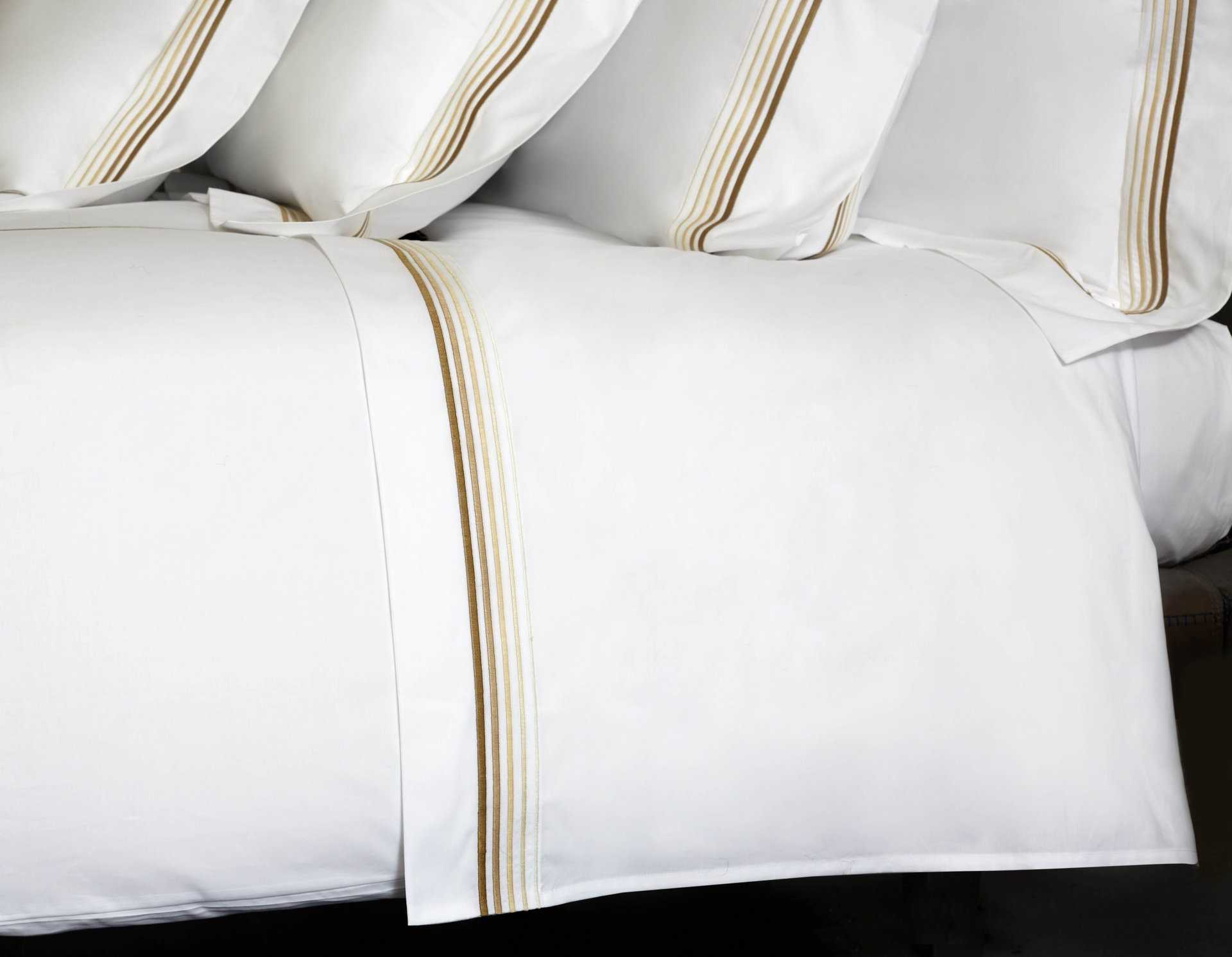
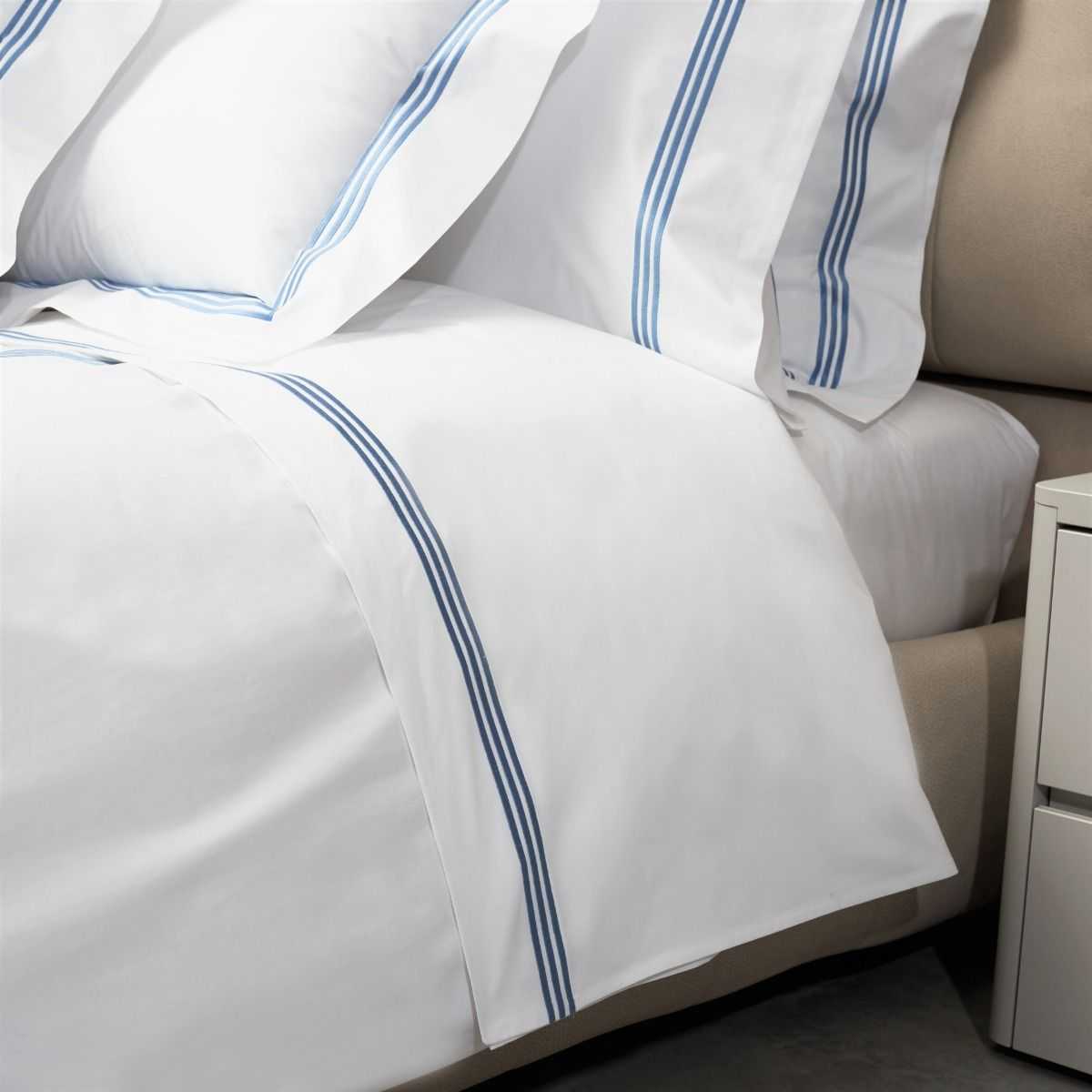
For example, the Platinum Flat Sheet is described as long-staple cotton percale with three embroidered lines and a palette of more than 20 colors. That makes it one possible reference point when considering a coordinated, detailed bed presentation. It is a flat sheet, not a pillow sham, so any pairing should be based on the actual colors, textures, and product specifications available for the pieces being considered.
In a guest room, coordination should not come at the cost of clarity. Keep the sleeping layer easy to identify, the decorative elements easy to remove, and the laundry instructions easy to follow. When those basics are settled, small details can do their work quietly: framing the bed, lending it character, and making the room feel ready.
Frequently asked questions
Should a pillow sham be the same size as its insert?
Compare the insert with the sham’s stated finished dimensions rather than relying only on a shared size label. The appropriate fit depends on the sham’s construction, fabric, and desired fullness. The insert should fit without excessive strain, bulging, or loose fabric.
Can guests sleep directly on a sham?
That depends on the product and the room’s setup. Shams are often used as decorative covers, while pillowcases are the usual sleeping layer. If a sham will stay on a pillow used overnight, check the fabric and care guidance and make the intended use clear in the room’s bedding plan.
How often should guest-room pillow shams be washed?
Follow the property’s hygiene and turnover procedures, along with the product’s care label. In regularly occupied guest spaces, the cleaning schedule should be documented and consistent. Remove a sham from service whenever it is soiled or damaged, regardless of the routine schedule.
Is cotton percale always the easiest option to maintain?
Not automatically. Percale describes a weave, but care also depends on fiber, finishing, color, trim, and product instructions. Compare the full care requirements with the laundry process available to you.
How can a property keep pillow shams looking consistent?
Standardize insert sizes and bed layouts, document the placement of display pillows, follow the care label, and inspect shams before they return to rooms. Keeping clearly labeled spares also helps maintain a uniform appearance when individual items need repair or replacement.
The finished bed is built on practical choices
A pillow sham is a small object with several responsibilities. It should fit its insert, complement the bedding, withstand handling, and fit the laundry routine. When those requirements are considered together, the result is more than a neatly arranged pillow: it is a guest bed that looks intentional without making daily care unnecessarily complicated.
Measure before ordering, read the specific product details, and trial the full care process before expanding a choice across multiple rooms. Whether the preferred look is crisp cotton, a relaxed natural texture, or a subtle embroidered finish, thoughtful sizing and repeatable care are what help it remain welcoming after the first impression.